
Industries
Drywall and Insulation Contractor Funding
How drywall and insulation contractors fund weekly crew payroll and board drops while a GC's pay-when-paid cycle and compressed schedules hold up payment.
The short answer
Drywall and insulation contractors often fund the gap between weekly crew payroll, board and insulation drops, and a general contractor's slower pay-when-paid cycle with short-term revenue-based working capital, sized to the weeks of labor and material they carry before a pay application is paid. Underwriters read deposit level and consistency, time in business, and existing obligations, so explaining the pay-application pattern matters.
Key takeaways
- Piece-rate crews make payroll track production: the weeks you hang the most board are the weeks you owe the most, and that work is billed a month later.
- Board and insulation drops are commonly due at the supplier before the pay application that bills them has been paid.
- As a mid-sequence trade you inherit every earlier delay, and a compressed drywall window packs the same labor into fewer, bigger payroll weeks.
- Size capital to the weeks of payroll and material you carry, not to the contract value, and plan for it to clear when the pay application lands.
- Capital is the wrong tool for an underbid per-board price, a shortfall that recurs every month, or a spray-foam rig that belongs in equipment financing.
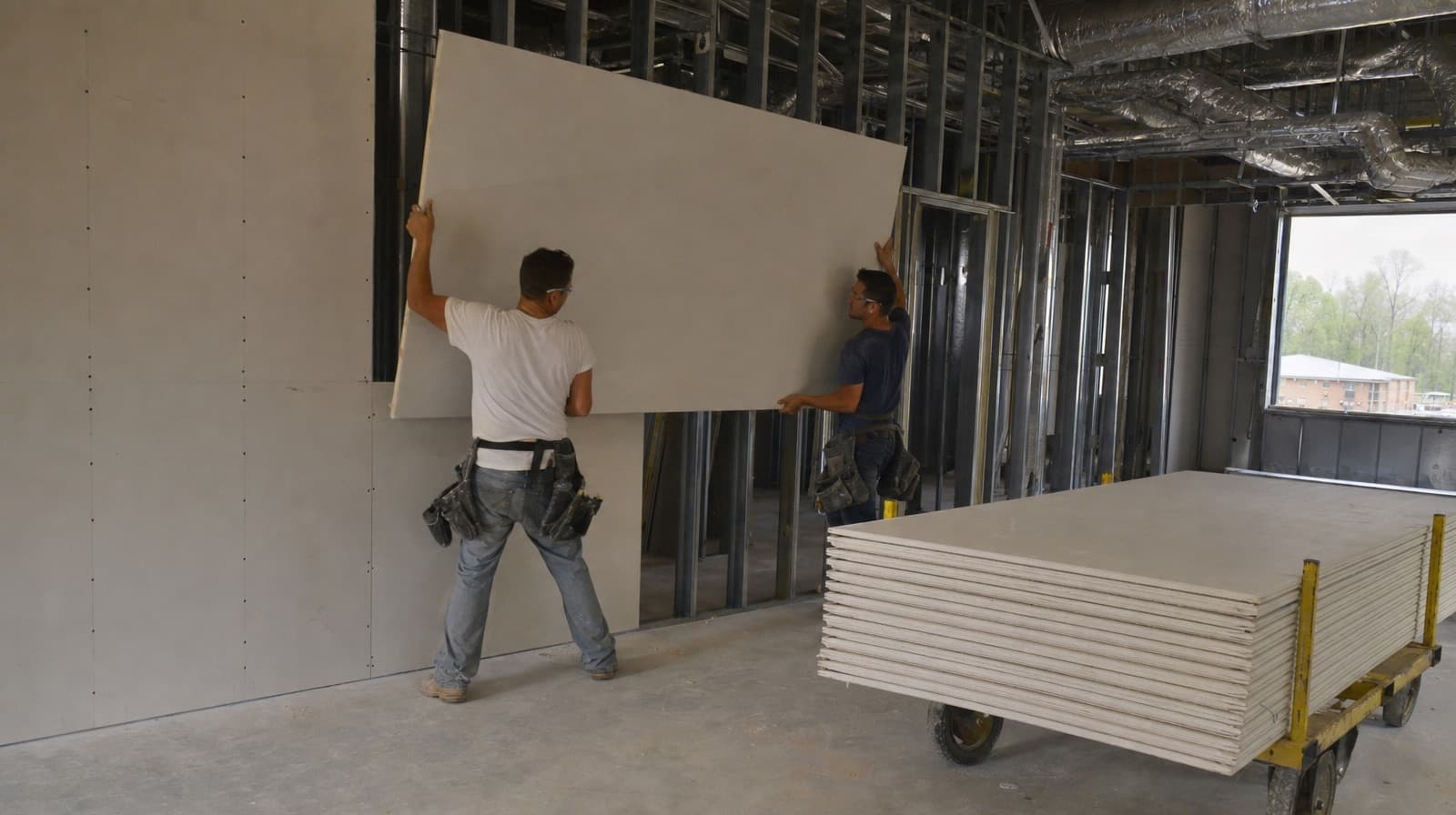
A drywall and insulation company is a labor business that happens to buy a lot of gypsum. The crews are the cost, they are paid every Friday, and the money for what they hung arrives on a general contractor's monthly cycle — usually after the owner has paid the GC first. Add the fact that you work in the middle of the build sequence, after framing and the mechanical rough-in and before paint and flooring, and you have a trade that carries the job financially at exactly the moment the schedule gets squeezed.
According to the Bureau of Labor Statistics, most drywall installers work for specialty drywall and insulation contractors rather than for builders directly. This is subcontracted work, so its cash flow is a subcontractor's cash flow. We read drywall and insulation files often, and they follow a recognizable shape. Here is how that shape reads to a lender, where working capital earns its keep in this trade, and the situations where it does not.
In this trade, a good week is an expensive week
Hanging and finishing crews are often paid by the board or by the square foot rather than by the hour. That makes payroll a function of production: the week your crews hang four floors is the week your payroll peaks. Hourly crews behave the same way on a busy job — more hands, more hours. Either way the labor is paid that Friday, and it is billed on the next monthly pay application, which then waits on the GC's cycle.
Material moves on a different clock again. Board and insulation are commonly delivered and stocked floor by floor ahead of the crews, and supplier invoices are commonly due within about thirty days — often before the pay application that bills that material has been paid. If your subcontract allows stored-materials billing, use it; it shrinks the float you carry from the first drop.
The middle of the sequence is where schedules get squeezed
Drywall sits downstream of framing, the mechanical rough-in inspections, and — for insulation — often its own inspection before board can go up. When any of that runs late, the GC rarely moves the finish date to absorb it. The drywall window shrinks instead. The same scope gets hung and finished by twice the crew in half the time, which packs the same labor bill into fewer, bigger payroll weeks while billing still goes in once a month.
Put a hypothetical number on it. Say a job carries $96,000 of hanging and finishing labor planned across eight weeks — $12,000 a week. Compress it to five weeks and the same labor runs roughly $19,000 a week, all of it paid before the pay application for that work has even been submitted. Nothing about the job got less profitable. The cash curve just got steeper.
Your pay cycle is set two tiers above you
| Mechanic | How it commonly runs | What it does to your cash |
|---|---|---|
| Place in the build sequence | After framing and rough-in inspections; insulation often inspected before board; ahead of paint, trim, and flooring | You inherit every earlier delay, and the finish date rarely moves to absorb it |
| Crew pay | Weekly; hanging and finishing crews are often paid by the board or the square foot | Payroll climbs with production, so the busiest weeks cost the most |
| Material drops | Board and insulation stocked ahead of each floor or phase; supplier invoices commonly due in about 30 days | Material is often due before the pay application that bills it is paid |
| Billing and payment | Monthly pay applications to the GC, frequently under pay-when-paid terms; residential builders often pay per house by phase | A month's work commonly lands after the following month's payrolls have already run |
| Retainage | Commonly 5 to 10 percent of each payment held until the project closes out | Your last day on site can come months before the project's closeout and the release |
The pay-when-paid mechanics themselves — what the clause does, how the wait moves down the chain, the pay-if-paid variant to watch for — are covered in our piece on pay-when-paid clauses. The short version for this trade: the clause sets the delay, and your crew size sets how expensive the delay is.
Where working capital earns its keep for a drywall company
- 1
Carry payroll through a compressed window
The cleanest use: the scope is contracted, the pay application is coming, and the only problem is that the labor landed in five weeks instead of eight. Size it to the extra payroll weeks you are carrying, repaid as those pay applications are paid.
- 2
Take the next job while the last one sits in retainage
Retainage on finished work plus a GC cycle on current work can leave a healthy company unable to mobilize the next project. Capital that keeps you bidding is often the highest-return use in the trade — when the margin on that next job clearly exceeds the price of the capital.
- 3
Stock a floor ahead of the crew
Material on the floor is what keeps a piece-rate crew productive. Funding a board drop the supplier wants paid before the GC pays you is a timing job, and timing jobs are what this product is built for.
When working capital is the wrong tool for this trade
Some drywall conversations should end with no, and we would rather say so here. If your per-board price does not cover labor, material, and overhead, capital funds the same loss at a larger scale. Capital buys time. It does not buy margin.
- A shortfall that recurs every month is not a timing gap — it is the bid, the contract terms, or the mix of work. Fix that before you borrow against it.
- A disputed pay application, or a GC showing signs of trouble, is a collection problem rather than a timing problem. Borrowing against money that may never arrive deepens the hole.
- A spray-foam rig, a boom lift, or a truck is usually a job for equipment financing, where the asset secures a longer term matched to its working life.
- Never take a second advance to cover the payments on a first. That is how a solvable gap becomes a spiral.
A drywall file reads well when it arrives with the story
Underwriting starts from your business bank statements, and it reads three things: the level and consistency of your deposits, how long the business has been operating, and how much of your cash flow is already committed to other financing. A drywall company's deposits are lumpy by design — pay applications land in spikes, retainage releases arrive months late — and lumpy is not a problem when it comes with the explanation. Before you talk to an advisor, have answers to the questions they will ask:
- What does the next stretch of payroll run, and which pay applications will cover it?
- Which jobs are waiting under pay-when-paid terms, and what has the GC told you about timing?
- How much retainage is held across finished work, and when do those projects close out?
- What material is stocked or on order and still unpaid at the supplier?
We are a direct lender, so the decision is made in-house, by a person who can hear that context — and funding can move in days, not weeks. Line it up before the next squeeze rather than during it. Urgency has never made a file more fundable, and the week a schedule compresses already belongs to the work.
Sources
- [1] Drywall Installers, Ceiling Tile Installers, and Tapers (Occupational Outlook Handbook) — U.S. Bureau of Labor Statistics (2026). Lists drywall and insulation contractors as the largest employer of drywall and ceiling tile installers.
Express Capital Funding · Direct lender
See what your revenue supports
We underwrite in-house and fund from our own balance sheet. $250,000+ in yearly revenue, 1+ year in business, and a 580+ credit score is the gate — a decision the same day, funding in as little as 24–48 hours.
4.8★ from 590 reviews · A+ BBB accredited · $250M+ funded
The Drywall & Insulation library
Frequently asked questions
Can a drywall contractor get working capital if the GC pays 60 days late?
That is one of the most common situations working capital is built for, provided the pay application is approved and the delay is timing rather than a dispute. The facility is sized to the payroll and material weeks you carry and planned to clear when the GC's payment lands.
How do drywall companies make payroll when crews are paid by the board?
They plan payroll against production, not the calendar. Piece-rate pay rises in the weeks crews hang the most, so contractors bridge those weeks with reserves, supplier terms, or short-term working capital, then repay it when the pay application covering that production is paid.
Will lumpy deposits from pay applications hurt a drywall company's funding application?
Not when they are explained. Spikes from pay applications and late retainage releases are normal for the trade, and a short note on which jobs paid when and which are pending lets an underwriter read the pattern as the trade rather than as volatility.
Should an insulation contractor use working capital to buy a spray-foam rig?
Usually not. A rig is a long-lived asset, and equipment financing lets the asset secure a longer term matched to its working life. Working capital fits the timing problems — payroll, material drops, and pay-when-paid delays.
When should a drywall contractor arrange funding — before or during a job?
Before. Capital arranged ahead of a compressed schedule is ready the week the crew count doubles, and urgency does not make a file more fundable. The calm version of a squeezed job is the one where the funding conversation already happened.
Keep reading

Published by Express Capital Funding, a direct lender to U.S. small and mid-sized businesses. This article is general information, not financial, legal, or tax advice, and is not an offer or commitment to lend.
← More industries