
Industries
Painting Contractor Funding: New Build vs Repaint
How painting contractors fund weekly crews and per-job materials when new builds pay last and hold retainage, repaints pay steadier, and exteriors are seasonal.
The short answer
Painting contractors often fund the gap between weekly crew payroll, per-job paint and sundries, and slow final payment with short-term revenue-based working capital sized to the weeks they carry. New-construction painting is paid last and often holds retainage until closeout, while commercial repaint contracts pay steadier. Underwriters read deposit consistency, so explaining that mix and your exterior season matters.
Key takeaways
- On new construction the painter is last on site and commonly last paid — retainage and the final punch list hold the end of the job.
- Commercial repaint and maintenance contracts are the steadier book, and they close out on your own work rather than the whole building's.
- Exterior work follows the weather, so a painting company's deposits commonly have a season — explain it and it reads as a pattern.
- Size capital to the weeks of payroll and material you carry, not to the contract value, and plan for it to clear when the job pays.
- An underbid job and a winter with no booked work behind it are problems capital cannot fix.
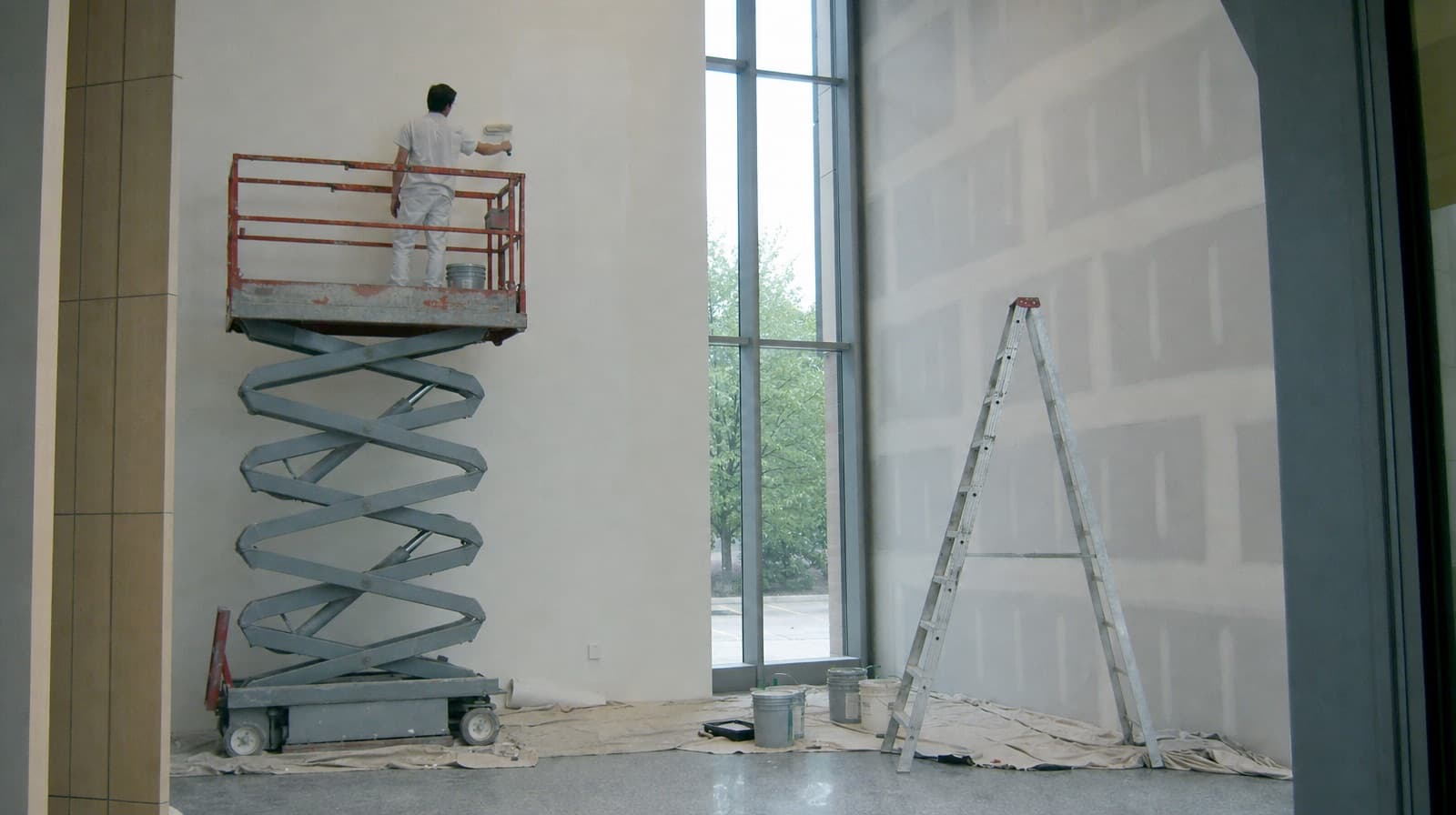
Painting is the trade the whole building waits on at the end — and pays at the end. On a new build you are last on site, your work is the surface where every other trade's mistakes show up, and your final dollars ride on the punch list of a project you did not run. On a repaint contract you may be the only trade on site, invoicing a property manager on your own schedule. Same crews, same paint, two very different cash cycles, and most painting companies run both.
Here is how a lender reads each of those cycles, where working capital earns its keep for a painting company, and the situations where borrowed money is the wrong answer.
On new construction, last on site means last to be paid
A new-construction painting sub bills through the GC's monthly pay applications like everyone else, but the timing is worse in two ways. First, the painting scope is concentrated at the end of the schedule, so the bulk of your billing lands in the project's final months — the months most likely to be slowed by closeout paperwork. Second, retainage held from each payment is commonly released only when the whole project closes out, and the painter's last weeks run right up against that line.
Then there is the punch list. Touch-up after the flooring crew, the electrician's trim-out, the cabinet installer — a painter is commonly called back to fix damage other trades caused, and the owner's walkthrough often decides whether the final payment moves. None of that is new revenue. All of it is crew time, paid weekly.
Repaint and maintenance contracts are the steadier book
Commercial repaints — an office park, an apartment community, a retail center on a repaint cycle — run differently. The painter is often the only trade, the customer is a property manager or owner rather than a GC, and the job is commonly invoiced by building or by phase. When it closes out, it closes out on your work, not on the building's.
That is why the mix matters so much to how a painting company's statements read. A steady repaint book underneath a lumpy new-construction book gives your deposits a floor. Consistency of deposits carries real weight in underwriting, and a company that can show where its baseline comes from reads very differently from one whose deposits simply swing.
| New construction | Commercial repaint and maintenance | |
|---|---|---|
| Place in the sequence | Last or near-last, with touch-up after other trades finish | Often the only trade on site |
| Who pays, and how | The GC, through monthly pay applications, frequently under pay-when-paid terms | A property manager or owner, commonly invoiced by building or phase |
| Retainage | Commonly 5 to 10 percent held until the whole project closes out | Depends on the contract; a single-trade job closes out when your own work is accepted |
| What can hold the final payment | Damage by later trades and the owner's walkthrough | A walkthrough with one decision-maker |
| Costs before the first payment | Crew weeks, paint and sundries, and lift rental across the job's longest stretch | Crew and materials for the first building or phase |
| Seasonality | Interior work runs most of the year; exterior packages follow the weather | Exterior repaints cluster in the good-weather months |
Exterior work has a season, and your deposits will show it
Outdoor painting depends on temperature and dry weather, and the Bureau of Labor Statistics notes that outdoor painting jobs may be seasonal. For a company with a heavy exterior book, that means a strong stretch of deposits followed by a quieter one, every year. Seasonality is not a weakness in a file — silence about it is. A one-line note on which months carry exterior work, and what interior or repaint work fills the rest, turns a dip into a pattern.
The capital question is timing. The busy season starts with crews hired, lifts and staging committed, and materials bought before the first exterior check arrives. Arranging that in the shoulder months, while your statements still show last season, is calmer than arranging it the week the weather turns.
Where working capital earns its keep for a painting company
- 1
Carry the end of a new build
Crew and material through the final months of a project whose payments land after closeout — sized to the weeks you carry, repaid as the last pay applications and the retainage release arrive.
- 2
Ramp up for exterior season
Crews, staging, and materials before the first exterior job pays, repaid out of the season itself. Size it so the season clears it, not so it runs into the following winter.
- 3
Take the multi-building repaint on net-30 terms
A large repaint can mean several weeks of payroll before the first invoice is paid. That is a timing gap on contracted work, which is exactly what this product is built for.
Capital cannot fix a thin bid or an empty winter
If a job is bid too thin to cover labor, material, and the punch-list callbacks you know are coming, capital funds the same loss at a larger scale. The same is true of a winter with no booked work behind it: borrowing to carry a crew through a season with no revenue scheduled on the other side is not a bridge, it is a bet. And a lift, a truck, or a large spray rig is usually a job for equipment financing, where the asset secures a longer term matched to its working life.
Take what the gap needs, not the biggest number available. A facility sized to the weeks you carry clears when the job pays; one sized to the contract value is still running when the next job starts.
Underwriting reads the level and consistency of your deposits, how long the business has been operating, and what is already committed to other financing. Bring the story behind the statements — the new-construction versus repaint mix, the jobs in closeout, the exterior season — and the file reads on its real shape. We are a direct lender, so a person who can hear that context makes the decision in-house, and funding can arrive in as little as 24–48 hours once documents are in.
Sources
- [1] Painters, Construction and Maintenance (Occupational Outlook Handbook) — U.S. Bureau of Labor Statistics (2026). States that painting jobs that are outdoors may be seasonal.
Express Capital Funding · Direct lender
See what your revenue supports
We underwrite in-house and fund from our own balance sheet. $250,000+ in yearly revenue, 1+ year in business, and a 580+ credit score is the gate — a decision the same day, funding in as little as 24–48 hours.
4.8★ from 590 reviews · A+ BBB accredited · $250M+ funded
The Painting library

Frequently asked questions
Can a painting contractor get working capital while waiting on retainage?
It is a common use. Retainage held on completed work is earned money waiting on a date, and working capital can carry the payroll weeks until the release, provided the project is headed for closeout rather than a dispute. Size it to the weeks you carry, not to the retainage balance.
How do painting companies cover payroll in the slow winter months?
Mostly by planning for the trough before it arrives: interior and repaint work to keep crews busy, reserves built in the exterior season, and short-term working capital arranged in the fall while statements still show the busy months. Capital fits a dip with booked work on the other side, not a winter with nothing scheduled.
Is a painting business loan the same as revenue-based working capital?
Not quite. A bank loan typically means a fixed monthly payment over a longer term. What a direct funder like us offers is revenue-based working capital: a lump sum up front, repaid out of the business's revenue over a short horizon. It fits a short gap with a defined end, such as a job waiting on final payment, not a long-term need.
Does new-construction painting work hurt a funding application?
No. It makes deposits lumpier, which is normal for the trade. What helps is showing the mix — how much comes from GC pay applications and how much from repaint contracts — so the underwriter can see where your baseline comes from.
Should a painting contractor use working capital to buy a lift or a truck?
Usually not. Equipment financing lets the asset secure a longer term matched to its working life, while working capital fits payroll, materials, and payment delays. A smaller tool bought as part of a specific job's costs is a different conversation.
Keep reading

Published by Express Capital Funding, a direct lender to U.S. small and mid-sized businesses. This article is general information, not financial, legal, or tax advice, and is not an offer or commitment to lend.
← More industries