
Industries
Masonry Contractor Business Funding
How masonry contractors fund brick deposits, crew payroll and cold-weather protection before pay apps clear, and when funding through winter is the wrong move.
The short answer
Masonry contractors often fund the gap between paying crews and suppliers up front and collecting monthly pay applications with short-term working capital, repaid as the general contractor's payments land. The gap comes from brick, block and stone deposits, weekly payroll for masons and tenders, scaffolding, and cold-weather protection. Retainage and a weather-limited season widen it; a winter that loses money every year needs a different fix.
Key takeaways
- Masonry sits mid-sequence, waiting on footings, framing and windows, so every upstream slip pushes the crew you are already paying toward cold weather.
- Below 40°F, industry guidance calls for heated materials, protective covering and, in hard cold, heated enclosures: real costs that are only recovered if the contract prices them.
- Ordering a job's face brick in one run keeps the color consistent and front-loads the materials bill weeks before the wall is billable.
- Labor is the big line: masons and tenders are paid weekly while pay applications clear monthly, less retainage.
- Capital bridges the timing on a priced job. It does not fix a bid that left out winter conditions or a season that loses money every year.
Masonry is a labor trade that buys its materials early and gets paid late. A crew of masons and tenders runs on weekly payroll, the brick for the facade is often ordered and partly paid for long before the first course is laid, and the money comes back on the general contractor's monthly pay cycle, less retainage. Add a season that shortens every time the temperature drops, and you have a business that can be thoroughly profitable and short of cash in the same month.
Mid-sequence means you inherit everyone else's delays
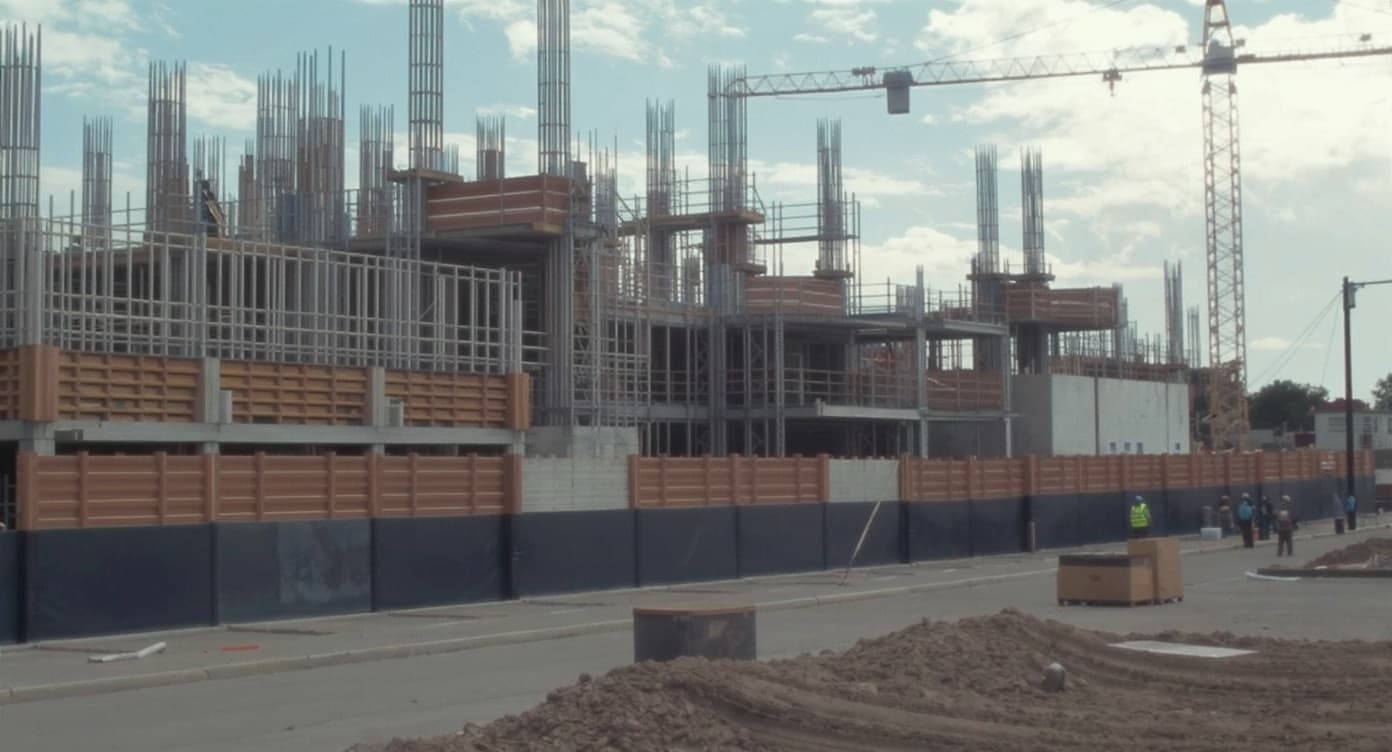
On most buildings, masonry is neither first nor last. Block foundations, stair towers and elevator cores may go in early. Brick, stone and veneer usually follow framing, sheathing, flashing and window installation. That position matters for cash. A mason's start date is set by the trades ahead of it, so a framing or window delay does not just push the job. It pushes the crew you are trying to keep together, the scaffold you are already renting, and on many jobs, the work itself into colder months.
| Masonry scope | Where it sits in the build | Cash out | When it usually comes back |
|---|---|---|---|
| Foundation and CMU walls | Early, after footings | Block, rebar, grout, crew payroll | The first pay applications, less retainage |
| Brick, stone and veneer | Mid-sequence, after framing, sheathing and windows | Brick or stone deposits, scaffold, crew payroll | Monthly pay applications on percent complete, commonly 30 to 60 days or more after the work |
| Cold-weather work | Whenever the schedule slips into cold months | Heaters, fuel, enclosures, insulating blankets, slower production | Only if the contract or an approved change order prices it |
| Cleaning, pointing and punch list | Late | A small crew and cleaning materials | The final payment, with retainage at project closeout |
Cold weather is a cost line, not just a schedule problem
The Brick Industry Association's technical guidance treats anything below 40°F as cold-weather masonry. In that range, mortar materials are heated, ice and snow are cleared from the surfaces receiving new work, and finished work is covered for 24 hours. In hard cold, below 20°F, the work goes inside an enclosure with auxiliary heat. Each of those steps is cash: propane or diesel for the heaters, tarps and enclosures on the scaffold, insulating blankets, and fewer courses laid per mason-hour.
Whether that cash ever comes back depends on paperwork written months earlier. If winter protection is priced in the bid or covered by an approved change order, it is a timing gap, and timing gaps are what short-term capital is for. If it is not priced, it is margin you are giving away, and no amount of funding changes that.
The brick is bought early and the wall is billed late
Face brick for a facade is often ordered for the whole job at once, because color can vary between production runs and a wall laid from two runs can show it. That is good practice and a cash problem: materials for months of work may need a deposit, or full payment, weeks before the first course is billable. Natural stone and special shapes often carry longer lead times and deposits of their own.
Put hypothetical numbers on it. Say a masonry contractor takes a $240,000 brick veneer package. The face brick for the full facade, ordered in one run, is $60,000, with half due at order and half on delivery. Scaffold, mortar and accessories add $12,000, and a crew of six masons and tenders runs about $13,000 a week. If the first pay application goes in at the end of the first month and pays 30 days later, the company has carried the brick, the scaffold and roughly eight weeks of payroll, on the order of $175,000, before the first check, and that check arrives less retainage.
The deepest point of that gap is the week before the first payment. The right ask is that number, less the cash already in the business, plus a cushion for a general contractor who pays late. It is not the $240,000 contract value, and it is not the biggest number a formula on your deposits might produce.
Retainage stretches the back end too. Your scope may be finished in month five of a building that is not accepted until month eleven, and the slice withheld from every pay application waits for that acceptance. Across several jobs at once, that held money can add up to a meaningful share of what the business has earned but cannot spend.
A seasonal pattern you explain reads very differently
In colder markets, a masonry company's statements often show strong deposits from spring through fall and a thin stretch in deep winter, softened if the business also runs restoration, repointing or interior work that continues in the cold. Underwriting reads deposit level, consistency over time, time in business, and how much of your cash flow is already committed to other financing. A winter dip with a clear story, and a summer that covers it, reads as the shape of the trade. The same statements with no explanation read as volatility. To size the off-season itself, see how to size the winter carry.
A one-page note alongside the statements does the explaining: which months are seasonal, which jobs are active, which general contractors pay on what cycle, and how much retainage is currently held. If a temporarily thin stretch has a signed job or a large pay application behind it, that is worth a conversation, and an advisor who knows a mid-sequence trade will ask about it rather than guess.
When funding is the wrong tool for a mason
- A winter that loses money every year. If the off-season has no work behind it and the busy season does not cover it, capital moves the loss to a later month rather than closing it. The fix is pricing, a line of work that runs in the cold, or a smaller year-round crew.
- Unpriced winter conditions or an underbid job. Capital buys time. It does not buy margin.
- A telehandler, mixer or scaffold system you will own for a decade. Equipment finance, secured by the asset with a term matched to its working life, usually fits better than short-horizon working capital.
- Payments on an existing advance. Taking a second position to cover the first turns a timing problem into a spiral. Pay one down first.
What fits cleanly is brick and stone deposits on signed work, payroll through a pay application that is approved but not yet paid, priced winter protection, and the stretch between finishing your scope and seeing your retainage. Size it to the deepest week, line it up when the schedule shows the squeeze coming, and repay it from the payments that close the gap. A direct lender decides in-house, so the move from signed documents to funds is measured in days, not weeks.
Sources
- [1] Technical Note 1: Hot and Cold Weather Construction — Brick Industry Association (2018). Defines cold weather as below 40°F and summarizes the TMS Specification's cold-weather requirements, including heated mortar materials, covering new masonry for 24 hours, and a heated enclosure below 20°F.
Express Capital Funding · Direct lender
See what your revenue supports
We underwrite in-house and fund from our own balance sheet. $250,000+ in yearly revenue, 1+ year in business, and a 580+ credit score is the gate — a decision the same day, funding in as little as 24–48 hours.
4.8★ from 590 reviews · A+ BBB accredited · $250M+ funded
The Masonry library


Frequently asked questions
Can a masonry contractor get working capital during the winter slowdown?
A winter slowdown does not rule it out on its own: underwriting reads the pattern across your statements, not one slow month, and a winter dip that the busy season covers reads as the shape of the trade. Capital fits best when it carries specific costs, like keeping a core crew or buying brick for a spring start, and is repaid from the season it sets up. A winter that loses money every year is a pricing problem, not a funding one.
How do masonry contractors pay for brick deposits before the job pays?
Common tools are supplier terms, where a supplier will extend them, and short-term working capital that carries the deposit until the first pay applications clear. Size the funding to the deepest point of the job's gap, usually the week before the first payment, rather than to the contract value.
Does retainage count when a lender looks at my masonry business?
Retainage will not appear in your deposits until it is released, so it is invisible on bank statements. Stating how much is currently held, and on which jobs, gives the reader a fuller picture of what the business has actually earned.
Can I fund cold-weather protection costs on a masonry job?
If heat, enclosures and protection are priced in the contract or covered by an approved change order, carrying that cost until the pay application clears is a normal use of working capital. If the costs were never priced, funding them only finances a margin loss.
Should a mason use working capital to buy a telehandler?
Usually not. A machine that works for years fits equipment finance, where the asset secures the facility and the term matches its working life. Working capital fits the timing costs of masonry: materials, payroll, scaffold rental and the wait for pay applications.
Keep reading

Published by Express Capital Funding, a direct lender to U.S. small and mid-sized businesses. This article is general information, not financial, legal, or tax advice, and is not an offer or commitment to lend.
← More industries