
Industries
Landscaping & Snow Removal Business Funding
How a lender reads a landscaping-and-snow file: the two shoulder-month gaps, what capital funds well in a counter-seasonal year, and when it doesn't.
The short answer
Landscaping and snow removal businesses qualify for working capital by showing the pattern behind their deposits: mowing revenue in the warm months, snow contracts in the cold ones, two shoulder gaps between. Declared seasonality is underwritten on its actual shape. Capital works best on pre-season ramp-up costs — crew, materials, plow prep — repaid out of the season it launches, at $250,000+ yearly revenue and a year or more in business.
Key takeaways
- A landscaping-plus-snow operation has two ramp-ups a year, and each one spends money weeks before its season bills anything.
- Declared seasonality is read as a pattern; the same statements left unexplained are priced as volatility.
- Seasonal flat-rate snow contracts smooth winter deposits; per-push billing swings with the weather — say which one you run.
- Equipment purchases often belong in equipment financing, with working capital covering the costs around the asset.
- If winter loses money every year with no snow book behind it, borrowing subsidizes the problem instead of bridging it.
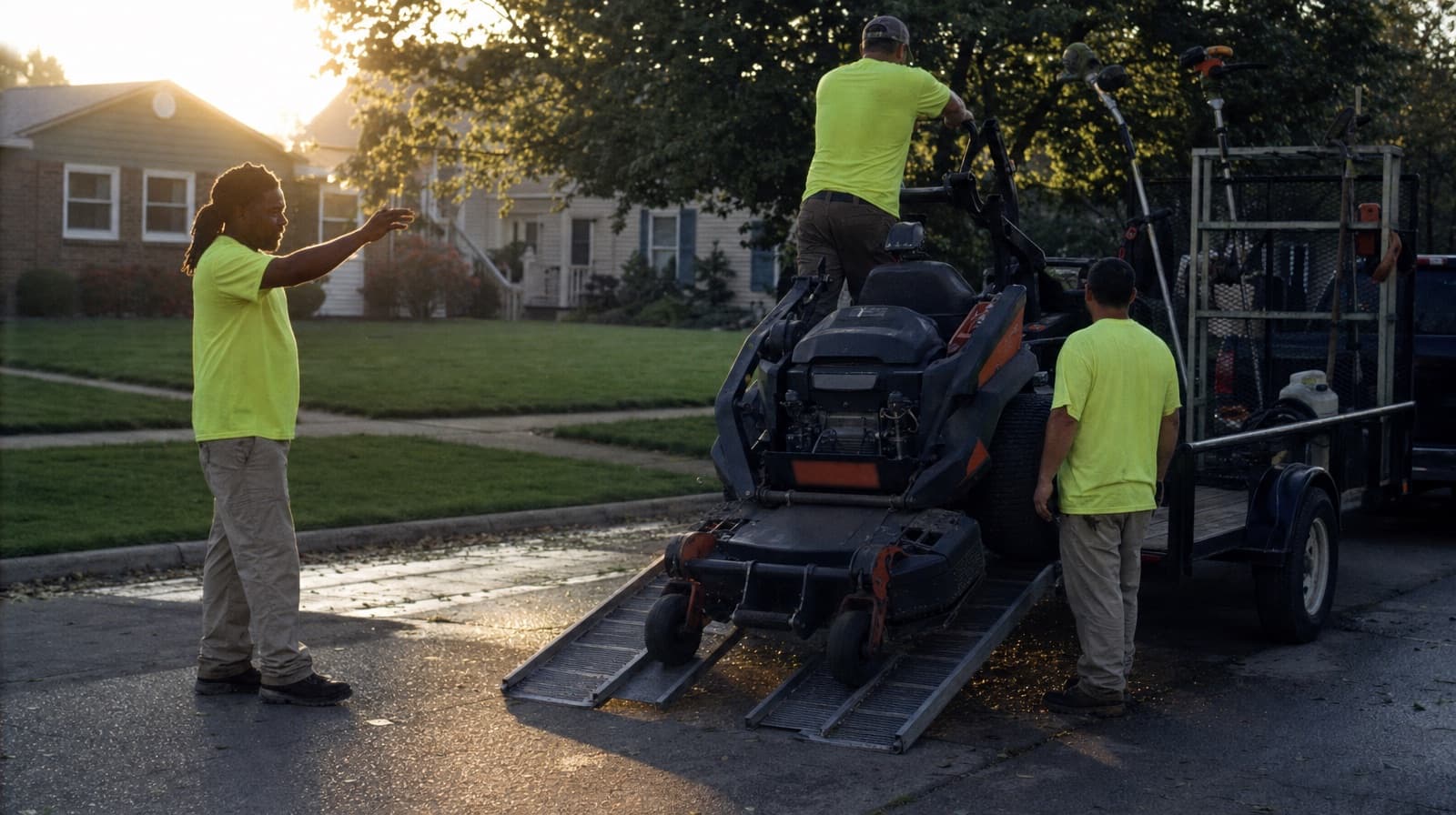
A landscaping company that plows snow is really two businesses sharing one bank account — a mowing and installs operation that earns from spring through fall, and a snow operation that earns when the weather cooperates. On paper, that counter-seasonal pairing should make cash flow smooth. In practice it creates two ramp-ups a year, and each one demands money weeks before the season it funds pays anything back.
Here is how that cycle looks from the underwriting side, what capital does well inside it, and — just as important — the situations where borrowing is the wrong answer for this trade.
Two seasons do not mean smooth cash flow — they mean two ramp-ups
The counter-seasonal calendar has four phases, and the two that cost the most money are the ones between the seasons. That is the part most owners feel every year and few ever name.
| Phase | What is happening | Cash direction |
|---|---|---|
| Spring ramp (roughly March–April) | Crews hired back, mowers serviced, trucks insured, first material orders placed — before the first maintenance invoice goes out | Out |
| Peak green season (May–September) | Maintenance contracts and install jobs billing steadily; commercial accounts often paying on net-30 to net-60 terms | In, with a lag |
| Fall transition (October–November) | Cleanups wind down while plows, spreaders, and salt get staged; snow contracts are signed but often not yet billing | Out |
| Snow season (December–March) | Seasonal contracts pay on schedule; per-push work pays only when it snows | In, weather-dependent |
The expensive mistake hides in the shoulder months: the crew. A foreman you lay off in November is working for somebody else in April, and replacing that experience at the start of the mowing season costs far more than carrying it through the winter would have. The operations that keep their best people treat the shoulder months as a financing question settled in advance, not a payroll emergency solved in the moment.
Seasonality reads fine on a file — silence about it does not
In this trade, consistency of deposits matters more than their size — and consistency is judged against the pattern you declare, not against a flat line. A file showing $60,000 months in July and $14,000 in November is a completely normal landscaping file. Stated plainly, it is read on its actual shape. Left unexplained, an underwriter has to price uncertainty they cannot resolve, and uncertainty is always priced against you.
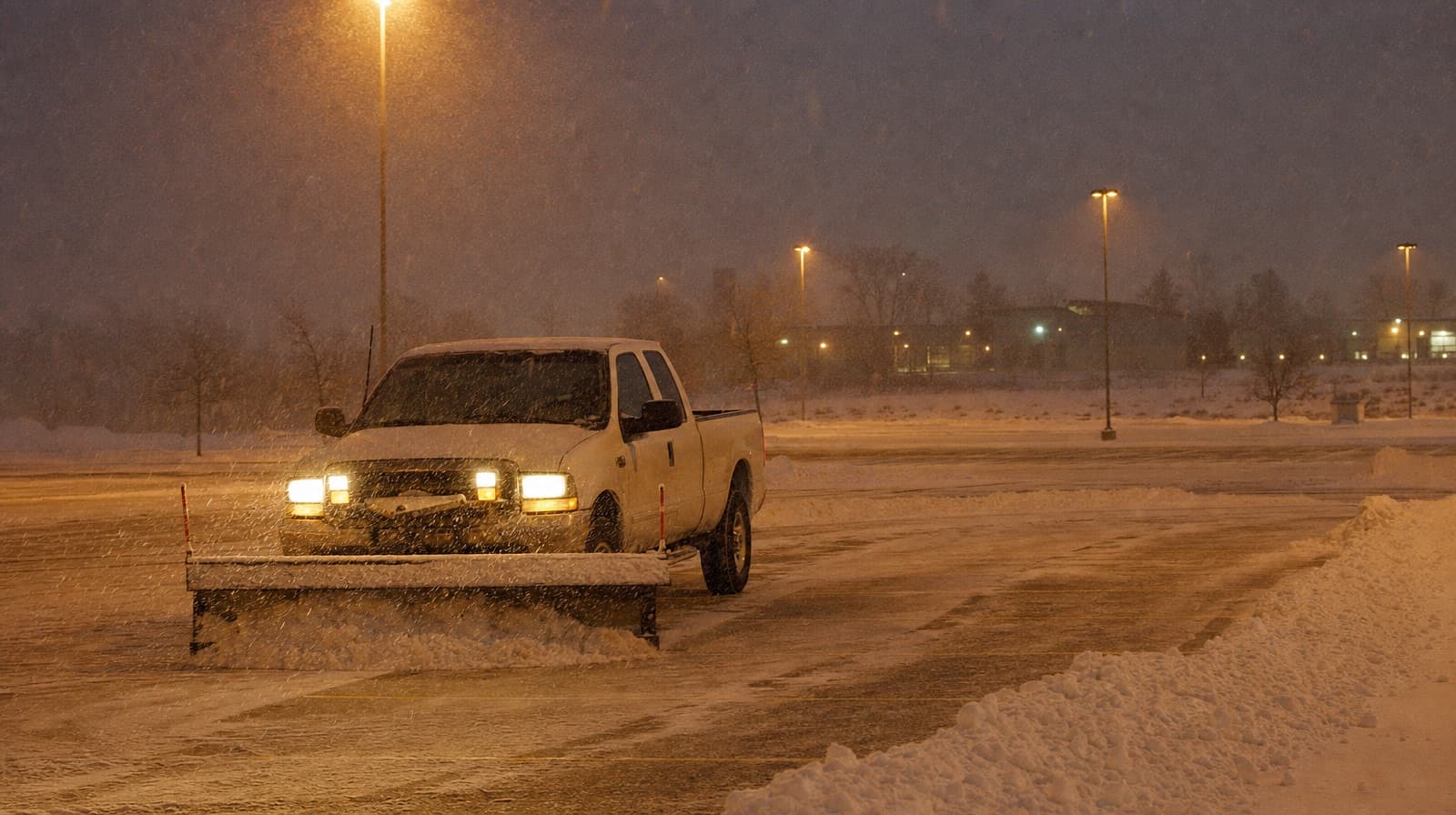
Snow revenue adds a wrinkle the file should also declare: contract structure. Seasonal flat-rate contracts bill monthly regardless of weather, which smooths winter deposits beautifully. Per-push or per-event billing pays only when storms come, so two identical snow operations can produce very different-looking bank statements. Neither structure is wrong — but the one you run changes how your winter reads, so say which it is.
The same logic softens the qualification math. A temporarily thin shoulder month is not an automatic no when the reason is sitting right there in the yearly pattern — a healthy business between its seasons is a different file from a business in decline, and it is worth a conversation rather than a silent pass.
Where capital earns its keep in this trade
The test for any borrowing is whether it is tied to revenue it directly produces. In a counter-seasonal business, three uses pass that test almost by construction.
- 1
Spring mobilization
Bringing the crew back, servicing the fleet, and stocking materials before mowing revenue starts. This is capital repaid out of the peak season it makes possible — the cleanest version of the trade.
- 2
Fall snow prep
Salt bought before the season is cheaper, and in a hard winter it is simply available — suppliers reward early cash buyers in both price and priority. Staging plows and spreaders in October is what lets December contracts bill on day one.
- 3
Bridging commercial receivables
HOAs, property managers, and municipal accounts routinely pay on net-30 to net-60 terms. Funding that carries payroll while those invoices land converts slow-paying contracts from a burden into a book of business you can afford to grow.
The equipment question, answered honestly
A new plow truck or a mower fleet upgrade is usually better served by equipment financing — a structure where the equipment itself is the collateral and the term matches the years the asset will earn. Revenue-based working capital repays on a shorter horizon, which fits the costs around the asset far better than the asset itself: the operator's wages, the insurance, the season's fuel and materials, the mobilization that puts the machine to work.
If a five-year truck is the whole need, say so, and use the structure built for it. If the need is everything the truck requires before it earns, that is working capital's job. Matching the tool to the need costs less than forcing either tool to do both.
When borrowing is the wrong answer
If winter loses money every year and there is no snow book — or no serious plan to build one — then funding the gap is not a bridge, it is a subsidy for a structural problem. Borrowing to reach revenue that is coming is what working capital is for. Borrowing to cover the same loss on the same calendar every year fixes nothing and adds a payment. The honest fixes are structural: build seasonal contracts, cut winter fixed costs, or plan the year on eight months of revenue. Capital amplifies a plan; it cannot substitute for one.
Line up capital before the season, not during it
How urgently a business needs money has never made it more fundable. The strongest applications in this trade arrive ahead of the ramp — late winter for the spring push, late summer for snow prep — while recent statements still show a strong stretch and there is time to deploy the capital before demand arrives. Applying at the bottom of a shoulder month means applying at your least representative moment.
The gate is the same one every business here clears: $250,000 or more in yearly revenue, a year or more in business, funding from $10K to $350K. Decisions are made in-house by a person who can hear the seasonal story, commonly the same day the statements are read, with funding in as little as 24 to 48 hours. Tell your advisor the pattern — both seasons of it.
Express Capital Funding · Direct lender
See what your revenue supports
We underwrite in-house and fund from our own balance sheet. $250,000+ in yearly revenue, 1+ year in business, and a 580+ credit score is the gate — a decision the same day, funding in as little as 24–48 hours.
4.8★ from 590 reviews · A+ BBB accredited · $250M+ funded
The Landscaping library

Frequently asked questions
Can a landscaping business get funding during the slow season?
Often, yes. A thin shoulder month with a clear seasonal explanation is read as a pattern, not a decline — an otherwise healthy business between its seasons is worth a conversation. The stronger move is applying ahead of the trough, while recent statements still reflect the busy stretch.
Do snow removal contracts count as revenue for qualification?
Yes — deposits are deposits. Seasonal flat-rate contracts that bill monthly read the smoothest. Per-push billing reads as volatility unless you declare it, because storm timing drives when the money lands. Either way, underwriting looks at the yearly pattern, so describe your contract structure when you apply.
Should I use working capital or equipment financing for a plow truck?
For the truck itself, equipment financing is usually the better fit — the asset is the collateral and the term matches its earning life. Working capital fits the costs around the asset: the operator, insurance, salt, fuel, and the mobilization that puts it to work before contracts bill.
How much can a landscaping business borrow?
Funding runs from $10K to $350K, and an approval is sized to what your average monthly deposits comfortably support across the whole year — not your peak months alone. An advisor reads the seasonal pattern with you and shows what your revenue actually supports.
Keep reading

Published by Express Capital Funding, a direct lender to U.S. small and mid-sized businesses. This article is general information, not financial, legal, or tax advice, and is not an offer or commitment to lend.
← More industries