
Insights
Financing Plumbing Parts Inventory: Truck Stock
Your books expensed it the day it was bought, but plumbing parts on your service trucks are real working capital. How lenders read and fund truck stock.
The short answer
Plumbing parts inventory financing usually means revenue-based working capital, because truck stock is expensed as supplies and never appears on a balance sheet a lender can margin against. Underwriting reads supply-house spend and deposit consistency in your bank statements instead. Fund stock that turns, size the buy to the turn, and repay out of the calls the stock lets you close.
Key takeaways
- Truck stock is expensed the day it is bought, so it never shows up as an asset — which is exactly why banks cannot lend against it and revenue-based funding can.
- A stock-out does not just delay a job; it converts a one-trip ticket into a two-trip ticket and hands the margin to the second visit.
- Your supply-house spend is one of the most legible patterns in your bank statements — a stocking buy you explain reads as a plan, not a problem.
- Fund the stock that turns and size the buy to the turn; a seasonal front-load should be cleared by the season it serves.
- If the trucks are already carrying parts that have not moved in a year, the right first move is a stock audit and a returns conversation — not a loan.
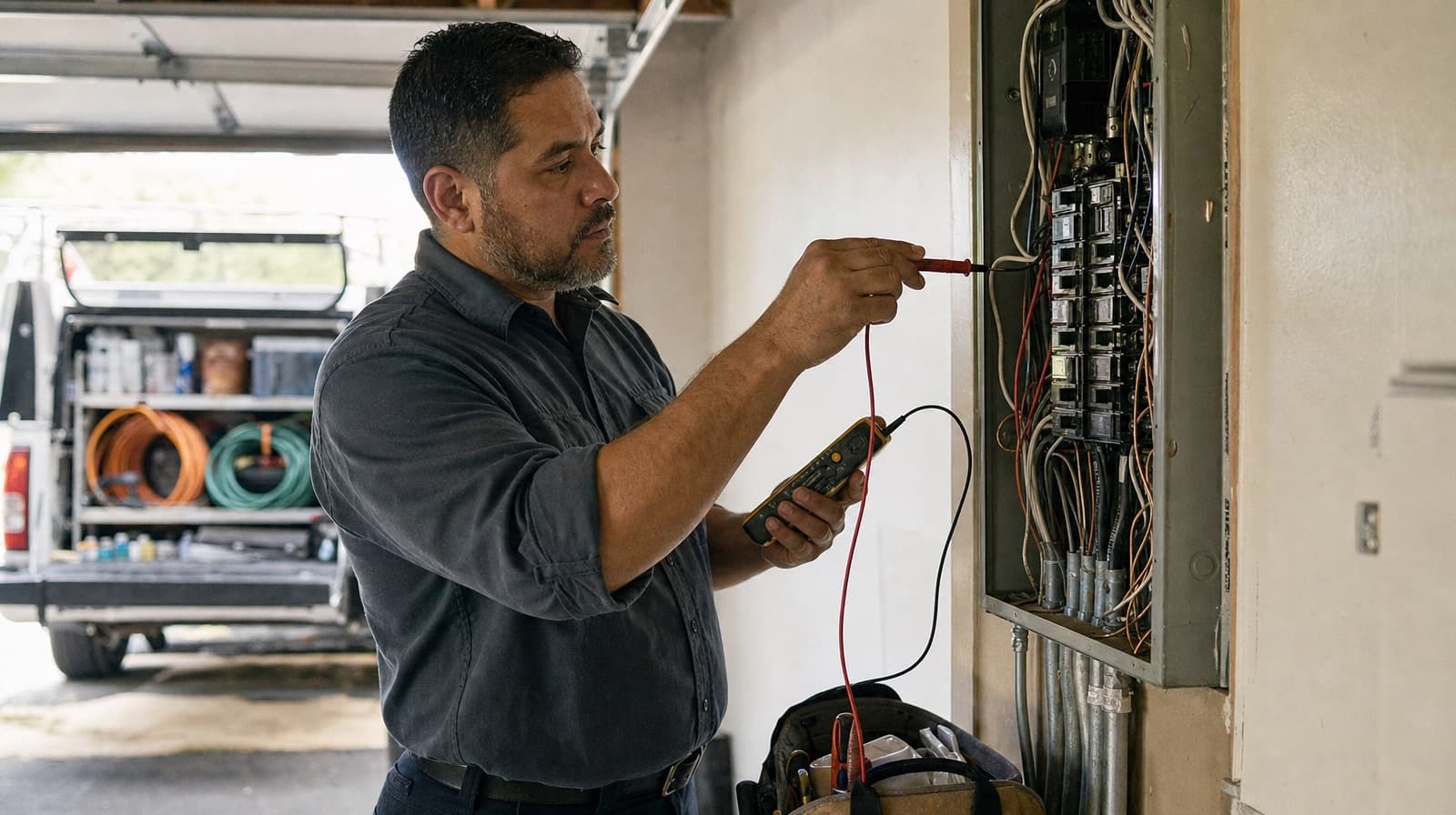
Ask a plumbing or electrical contractor how much inventory the business carries and the honest answer is usually “not much.” Then open the trucks. Between the vans, the shop cage, and the will-call counter, a six-truck service operation is routinely rolling around with tens of thousands of dollars in fittings, valves, wire, breakers, and water heaters — none of it recorded anywhere a lender would call inventory. Your accountant expensed it the day it was bought. Your balance sheet says it does not exist. Your cash flow knows better.
Our guide to funding a plumbing or electrical business covers where working capital fits across the whole trade. This piece goes narrow, on the one asset the trade runs on and the books hide: the truck stock itself — why it is invisible on paper, how a lender actually reads a stocking buy, how to size one, and when buying more stock is the wrong move entirely.
Truck stock is working capital your books already spent
A retailer's inventory sits on the balance sheet as an asset and becomes cost of goods sold when it sells. A service contractor's parts take a different path: they hit the books as a supplies or materials expense the day they come off the supply-house counter, whether they get installed that afternoon or ride around on a truck for six months. Same cash outlay, completely different paper trail — and the difference matters more than most owners realize when it is time to borrow.
| Retail inventory | Service-truck stock | |
|---|---|---|
| Where it lives | A warehouse or stockroom, counted and valued | Six trucks, a shop cage, and a running mental map |
| How the books treat it | An asset until it sells | An expense the day it is bought |
| What a bank sees | A borrowing base it can margin against | Nothing — there is no inventory line to lend on |
| What actually finances it | Inventory lines, floor plans, trade terms | Working capital read off deposits and supply-house spend |
This is why the bank conversation about parts stock so often goes nowhere: asset-based lenders lend against inventory they can count, and a service trade has no inventory line to count. Revenue-based working capital sidesteps the problem entirely — it is underwritten off your deposits and their consistency, not off an inventory count, so the stock's invisibility on paper stops being a barrier.
A stocked truck closes the ticket; a stock-out reschedules it
The operating number truck stock actually drives is first-visit completion — the share of service calls your techs close in one trip. Every ticket that ends in “we’ll have to order it” becomes a second truck roll: the drive time, the tech hour, the reschedule, and a customer who has now had a full day to search for someone with the part on hand. Say a return trip costs you $150 in labor and fuel and pushes $600 of revenue out a week — across a month of order-it endings, that is real margin quietly leaking out the back of the schedule. The parts were never the expensive part. The second trip is.
Well-run shops treat each truck like a small store: a minimum and maximum count for the parts that close calls — the common trap assemblies, the fill valves, the 40- and 50-gallon heaters, the breakers that fail every summer — and a standing restock day that brings every truck back to minimum. Funding truck stock, done properly, is funding that discipline: capital that puts the A-list on every truck and keeps it there, repaid out of the tickets the stock lets you close in one visit.
What an underwriter sees when you fund a parts buy
Here is the part few owners know: your supply-house spend is one of the most legible patterns in your whole file. When we read a service trade's bank statements, the steady weekly ACH and card payments to two or three supply houses track your call volume almost as faithfully as your deposits do — spend that rises with revenue reads as a business buying parts to do work. A one-time stocking order breaks that rhythm with a lump, and what matters is who names it first. Name it yourself and it reads as a plan; leave it for the underwriter to find and it becomes a question that costs days.
So explain it before it is asked. Tell your advisor what the buy is — a truck-stock build-out, a pre-season heater order, a jump from will-call pricing to stocking-order pricing — what it does to your first-visit completion, and how fast that class of parts historically turns for you. That last number is the one that carries weight, because stock that turns is the textbook case of borrowing for a return: the capital converts into closed tickets within weeks, and the payback comes out of revenue the stock itself produced.
Size the buy to the turn, not to the catalog
The discipline that governs a retailer's seasonal buy — covered in our guide to pre-season inventory funding — applies truck for truck here, because service-trade stock is more seasonal than it looks. Water heaters fail in the first cold snap. Sump pumps sell in spring. Condensate pumps, panel work, and generator hookups each have a season of their own. A front-load bought ahead of the surge, at stocking-order pricing, is the classic high-return version of this move; the classic mistake is financing it on a timeline that outlives the season it serves.
- Fund the A-stock — the parts your reorder history proves turn in weeks — and let the supply house keep warehousing the exotic ones.
- For a one-time seasonal front-load, size the facility so the season's installs clear it comfortably: say $15,000 of heaters ahead of the cold snap, turned in eight weeks, should not still be a payment in April.
- For steady replenishment, a line-of-credit structure fits better than a lump — an approved total you draw against on restock day.
- Arrange it before the season, not during it. Urgency does not make anyone more fundable, and the shop that lines up capital in September buys October's heaters at its own pace.
When more stock is the wrong answer
Sometimes it is. If the trucks are already heavy with parts that have not moved in a year, the first move is not a loan — it is an audit and a returns-for-credit conversation with your supply house, because borrowing to add stock on top of dead stock finances the same mistake twice. If call volume has been sliding for months, deeper shelves will not ring the phone; fix the demand side first, because stock only earns when tickets are being booked against it. And if what you actually need is another van, that is a different product altogether — a vehicle is a multi-year asset that belongs in equipment financing, where the asset is the collateral. Repairing a down van to get its route producing again is squarely a working-capital job; buying one is not, and an advisor here will tell you which conversation you are in.
That honesty is the point. Truck stock is one of the few uses of capital where the return shows up on next month's statements — but only when the stock turns. The published basics are the same as for any working-capital file: $250,000 or more a year in revenue, a year or more in business, and funding from $10K to $350K sized to what your deposits support. Decisions are made in-house by a real person. Funded files see money in as little as 24 to 48 hours — fast enough to have the trucks restocked before the weather turns.
Express Capital Funding · Direct lender
See what your revenue supports
We underwrite in-house and fund from our own balance sheet. $250,000+ in yearly revenue, 1+ year in business, and a 580+ credit score is the gate — a decision the same day, funding in as little as 24–48 hours.
4.8★ from 590 reviews · A+ BBB accredited · $250M+ funded
Frequently asked questions
Can I finance parts inventory for a plumbing or electrical business?
Yes — through revenue-based working capital rather than an inventory loan. Because truck stock is expensed rather than held as a balance-sheet asset, there is no collateral base for a traditional inventory line, so the funding is underwritten off your deposits and their consistency instead. The buy is repaid out of the service revenue the stock produces.
Why won't my bank lend against my parts stock?
Asset-based inventory lending needs an inventory line it can count, value, and margin against. Service-trade parts are expensed at purchase and scattered across trucks, so on paper there is nothing to lend on. That is a bookkeeping artifact, not a verdict on your business — which is why lenders that read bank statements instead of balance sheets fund this need routinely.
Should I fund one big seasonal stocking order or restock as I go?
Match the structure to the pattern. A one-time pre-season front-load fits a facility sized so the season's installs clear it comfortably. Steady week-in, week-out replenishment fits a line-of-credit structure — an approved total you draw against on restock day. Your reorder history usually makes the answer obvious, and an advisor can walk through both against your actual statements.
Keep reading
Published by Express Capital Funding, a direct lender to U.S. small and mid-sized businesses. This article is general information, not financial, legal, or tax advice, and is not an offer or commitment to lend.
← More insights