
Industries
Roofing Contractor Business Funding
How storm-season readiness and insurance-claim timing shape a roofer's cash flow — and how contractors fund crews and materials before the carrier pays.
The short answer
Roofing companies are underwritten around timing: crews and materials are paid within days, while insurance carriers and commercial customers pay on their own calendar, weeks or months later. Weather-driven, lumpy deposits are normal for the trade and are not read as instability when they are explained. The classic facility funds crews and materials on approved work, repaid as the carrier releases and invoices land.
Key takeaways
- Storm season is won in the quiet months before it — the roofers who capture the surge are staffed and stocked when the first calls come.
- Insurance-paid work is real revenue on the carrier's calendar: staged payments and supplement reviews mean you front the job long before it settles.
- Explain your deposit pattern — which deposits are claim releases, which months carried the surge — and lumpy stops reading as risky.
- Capital does not fix underbid jobs or denied claims; borrowing against money that may never arrive deepens a gap instead of bridging it.
- A truck or lift purchase is usually an equipment financing job, not a working capital one.
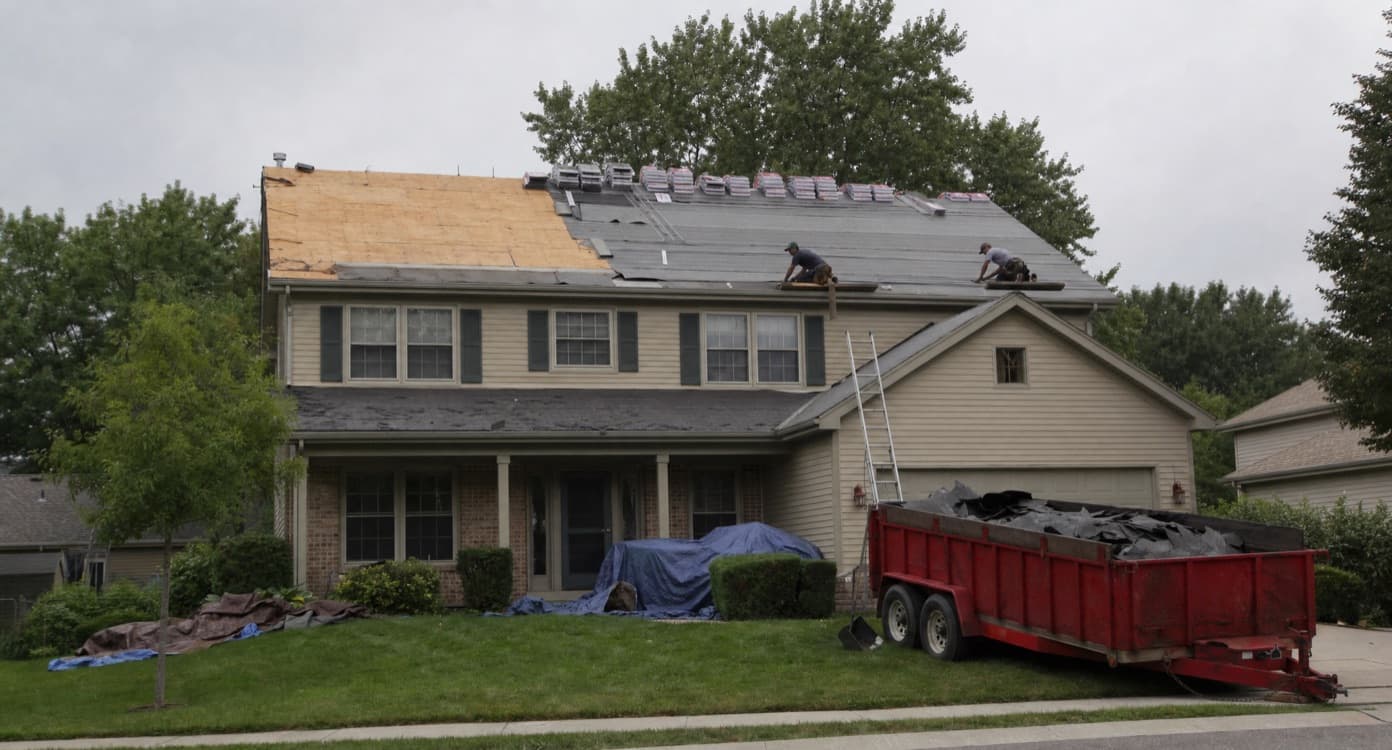
Roofing may be the most cash-hostile trade we fund. The money leaves in the worst possible order — crews and materials paid within days, the biggest checks arriving on an insurance carrier's schedule weeks or months later — and the busiest season is the one that strains the bank account hardest. None of that makes a roofing company hard to fund. It makes it a company that has to be read correctly.
Storm season is won before the storm
When a hail or wind event hits a market, the phone does not ring twice as often — it rings ten times as often, for about a season. The roofers who capture that surge are the ones who already had sub crews signed, a project manager trained, and a supplier relationship that can deliver squares this week. Everyone else spends the surge hiring, and hiring during the surge means paying the most for the least experienced crew in the market at the exact moment quality decides which jobs turn into referrals.
That readiness is a cash decision made in the quiet months. Sub crews expect to be paid weekly, not when the carrier settles. Extra trucks on the road, a canvassing team, a storm's worth of shingles committed at the supplier — all of it is paid for before the first insurance check moves. And here is the part worth writing down: the week after the storm is the worst week to start arranging capital, not because it cannot be done, but because every hour of that week already belongs to the work. Urgency has never made anyone more or less fundable. Owners who line up capital before the season are not better candidates than owners who call mid-surge — they are simply free to spend the surge selling roofs instead of assembling paperwork.
Insurance work is real revenue on someone else's calendar
Storm restoration runs on the carrier's clock. A claim typically pays in stages — a first payment when the claim is approved, the balance released after the roof is on and documented, and any supplement for what the first scope missed going through its own review cycle. Meanwhile you have bought the materials, paid the crew, and moved to the next house.
Put a hypothetical number on it: say a $28,000 approved claim pays $11,000 up front, with the balance released after completion and final inspection. You will have spent something like $16,000 on shingles, underlayment, and labor before that second check exists — on one roof. Multiply that across thirty open claims and a profitable, well-run roofing company can show a bank balance that looks like a struggling one. That is not mismanagement. It is the shape of the trade.
The statements alone cannot tell that story. A deposit pattern swinging from $35,000 one month to $190,000 the next reads as chaos to a lender who does not know roofing — and as an ordinary claims cycle to one who does.
What the capital is usually for
- 1
Staff and stock before the season
Crews signed, materials committed, the sales effort ready in the weeks before storm season opens. This is the highest-return spend in the trade — and it has to be paid for out of the slow months that precede it, which is precisely when cash is thinnest.
- 2
Carry approved claims to the final check
Materials and labor on work the carrier has already approved, repaid as releases and supplement payments land — the most naturally self-liquidating use of capital in this trade.
- 3
Take the commercial job with slow terms
Commercial reroofs and builder work commonly pay on net-60. Roofing companies use funding for exactly this — keeping cash flow healthy enough to keep saying yes to good projects, including jobs on slow terms, instead of declining work over timing.
When funding is the wrong tool
Some of the most useful conversations we have with roofers are the ones where the answer is no. A denied claim is not a receivable — it is a dispute, and borrowing against money that may never arrive does not bridge a gap, it deepens one. The same goes for margin: if the retail jobs are bid too thin to clear your overhead, capital funds the same loss at a larger scale. Capital buys time. It does not buy margin.
And if the need is a new truck, a lift, or equipment, that is usually a job for equipment financing — where the asset itself secures a longer term matched to its working life — rather than for revenue-based working capital, which is built for the timing problems above.
Matching the structure to the job
| Situation | What usually fits |
|---|---|
| Pre-season staffing and materials build-up | Working capital sized to be repaid out of peak-season revenue |
| Approved claims awaiting the completion release | Short revenue-based funding structured around the claims cycle |
| Commercial reroof paying on net-60 | Working capital built around roughly that payment horizon |
| New truck, lift, or equipment purchase | Equipment financing — the asset secures it |
Size it so the season clears it. A facility repaid out of the surge is a tool; one still running through a northern January is a burden arriving in your weakest month. The gate is the same as any trade we fund, and the fastest way to find your number is a conversation with an advisor who already knows what a claims cycle looks like.
Express Capital Funding · Direct lender
See what your revenue supports
We underwrite in-house and fund from our own balance sheet. $250,000+ in yearly revenue, 1+ year in business, and a 580+ credit score is the gate — a decision the same day, funding in as little as 24–48 hours.
4.8★ from 590 reviews · A+ BBB accredited · $250M+ funded
The Roofing library
Frequently asked questions
Are roofing business loans the same as revenue-based funding?
If you searched for roofing business loans, here is the honest translation: what a direct funder like us offers is revenue-based funding, not a traditional term loan. Capital arrives up front and is repaid out of revenue, so the trade's lumpy season works with the structure instead of against it. The label matters less than the fit — the timing problems above are what this product is built for.
Can a roofing company qualify for funding with seasonal revenue?
Yes. Weather-driven revenue is expected in this trade. Describe your season — which months surge, which go quiet, and which deposits are insurance releases — and the file is read on its actual shape rather than against a smooth monthly average.
Can I get funding while waiting on insurance claim payments?
That is the classic roofing facility: materials and labor on approved claims, structured to be repaid as the carrier releases arrive. A denied or disputed claim is different — borrowing against money that may never come is something a good advisor will talk you out of.
When should a roofer apply — before or during storm season?
Before. Urgency does not make a file more fundable, and the weeks after a storm are the worst time to take your attention off the work. Capital arranged in the quiet months is deployed on the first day of the surge.
Is working capital the right way to buy a new truck or equipment?
Usually not. Equipment financing lets the asset secure the facility, which generally means a longer term matched to its working life. Working capital fits the timing problems — payroll, materials, claim delays — not long-term asset purchases.
Keep reading
Published by Express Capital Funding, a direct lender to U.S. small and mid-sized businesses. This article is general information, not financial, legal, or tax advice, and is not an offer or commitment to lend.
← More industries